- Last updated
November 17, 2026 - Reading time
6 minutes
CCD2 explained: what changes at checkout in Sweden (2026)
From November 20, 2026, new consumer credit rules apply in Sweden. If you offer invoice or part payment, here's what changes in your checkout and what to do before the date.


What this is about
CCD2 is the EU's new Consumer Credit Directive. In Sweden it applies from November 20, 2026, through a new Consumer Credit Act. It brings buy now, pay later, invoice and part payment under consumer credit rules, so shoppers get a stricter credit check, 14 days to withdraw and clearer credit marketing. For most merchants, the credit provider handles the checks, and the change you'll see is more declined credit requests.
- What is CCD2?
The EU's new consumer credit rules, which apply in Sweden from November 20, 2026. - Is pay later covered?
Yes. Most invoice and part payment options now count as consumer credit. - Does it cover my own invoice?
Not if you issue it free of interest and fees, paid within 50 days, or 14 for larger online sellers. - Will more shoppers be declined?
Some will, since every credit request gets a stricter check.
What is CCD2?
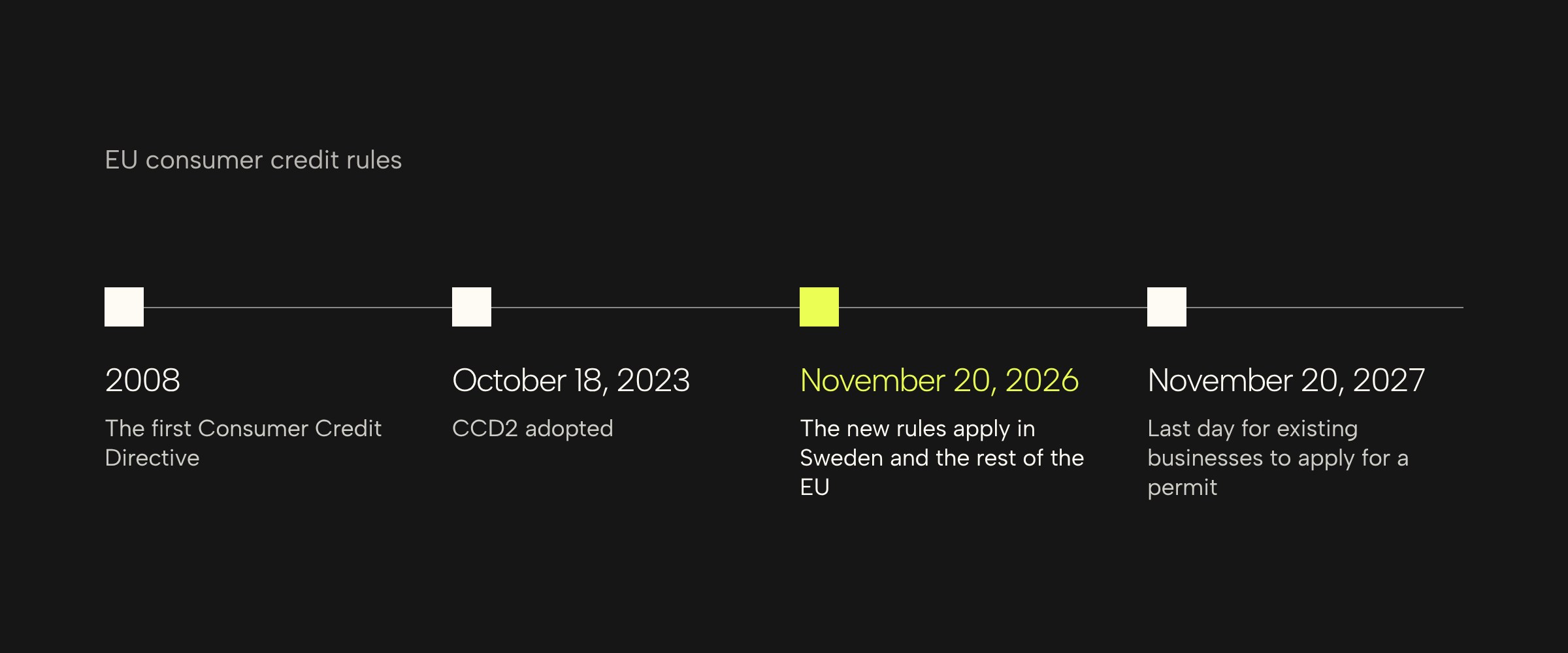
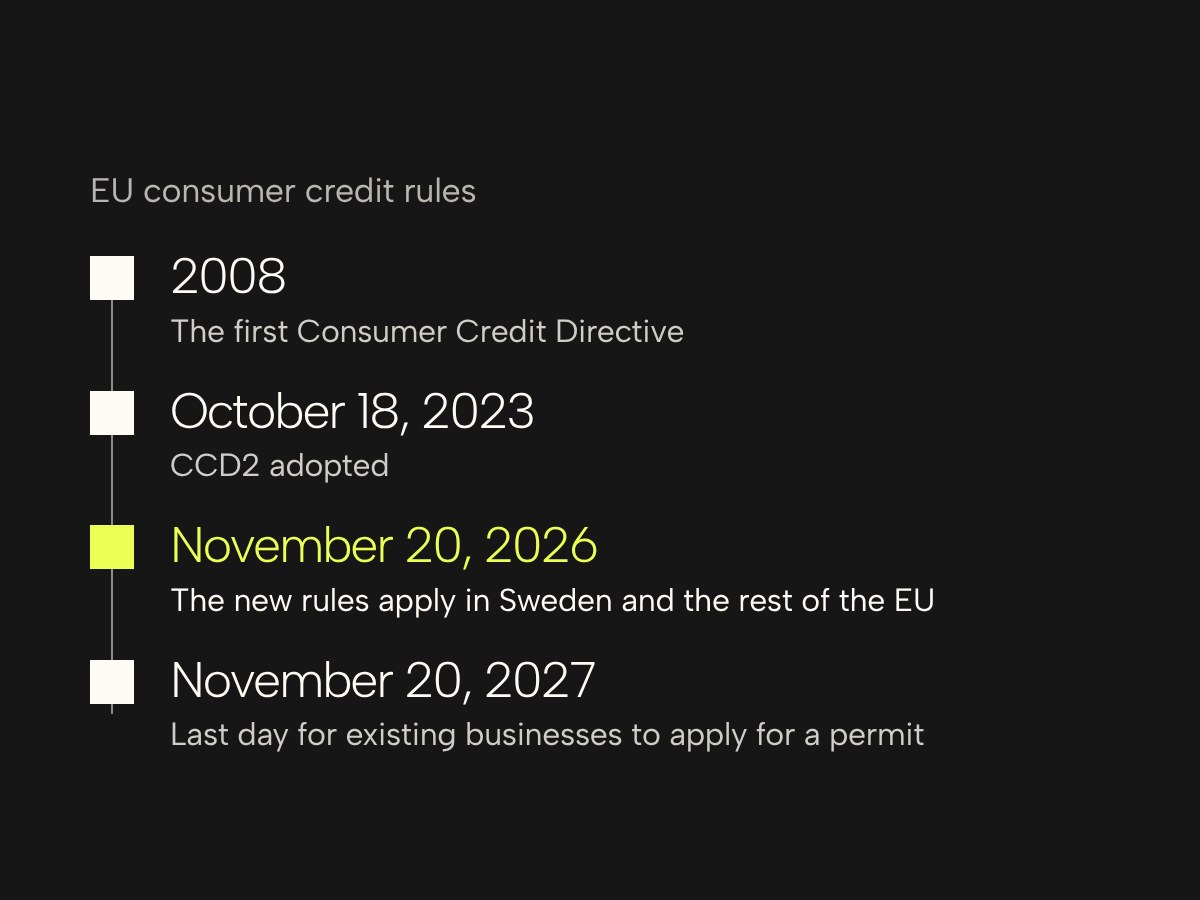
CCD2 is the second EU Consumer Credit Directive, adopted on October 18, 2023. It replaces the 2008 directive and sets the rules for consumer credit in every EU country from November 20, 2026.
Each country writes the directive into its own law. In Sweden, that's a new Consumer Credit Act and a revised act on businesses that offer certain consumer credit, known as LVBK. Both apply from November 20, 2026, together with new regulations from Finansinspektionen.
The rules apply in every EU country, with national differences. This guide covers Sweden. For Finland, Denmark, Germany, the Netherlands, Austria and Norway, see the CCD2 readiness guide, which compares the markets.
The 2008 directive was written before buy now, pay later became common in online checkouts. The new one is written for credit as it often works today: small amounts, granted at the moment of payment and often on a phone.
What changes on November 20, 2026?
More kinds of credit are covered, and every credit decision gets stricter. The directive narrows the old exemptions for small and short-term credit, so most buy now, pay later options at checkout now count as consumer credit. Interest-free and fee-free is no longer enough to stay outside the rules.

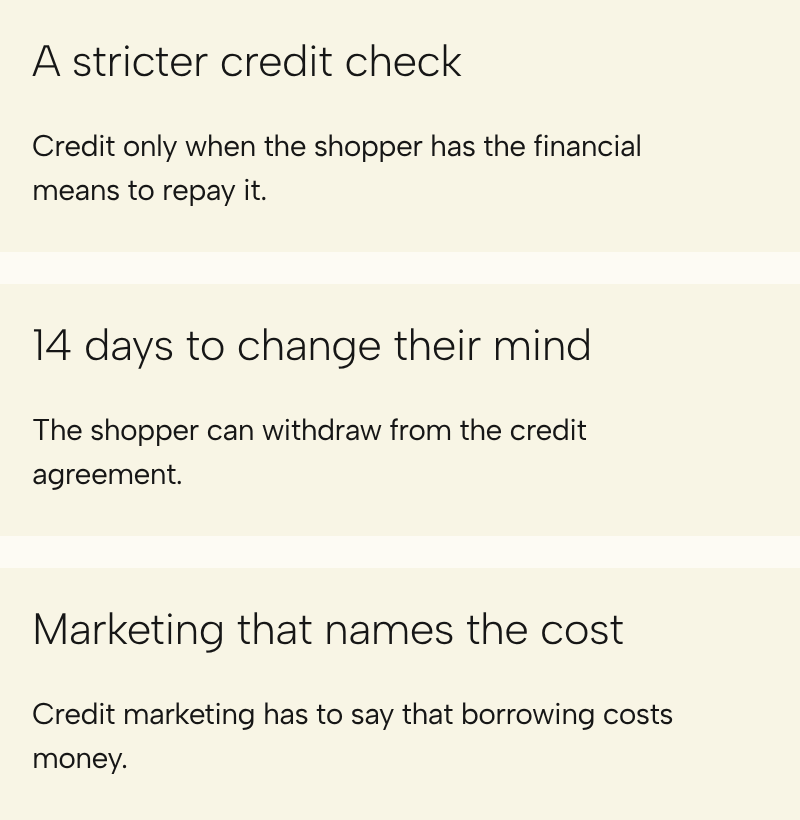
For shoppers who choose invoice or part payment, three things change:
- A thorough credit check. Credit can only be granted if the shopper has the financial means to repay it, according to the new Consumer Credit Act.
- A right to change their mind. The shopper can withdraw from the credit agreement within 14 days.
- Clearer marketing. Credit marketing has to say that credit brings costs. The directive's own example is "Caution! Borrowing money costs money."
In practice, the credit provider runs the check and gives the shopper the credit terms. You see the result in your checkout: approved or declined. If the decision is no, the credit provider tells the shopper, and a shopper who got an automated decision can ask for a person to review it.
Does CCD2 apply to my own invoice?
Not if your invoice meets the conditions for the exemption. According to Konsumentverket, the credit has to come from you as the seller, be free of interest and fees and be paid within 50 days of delivery.
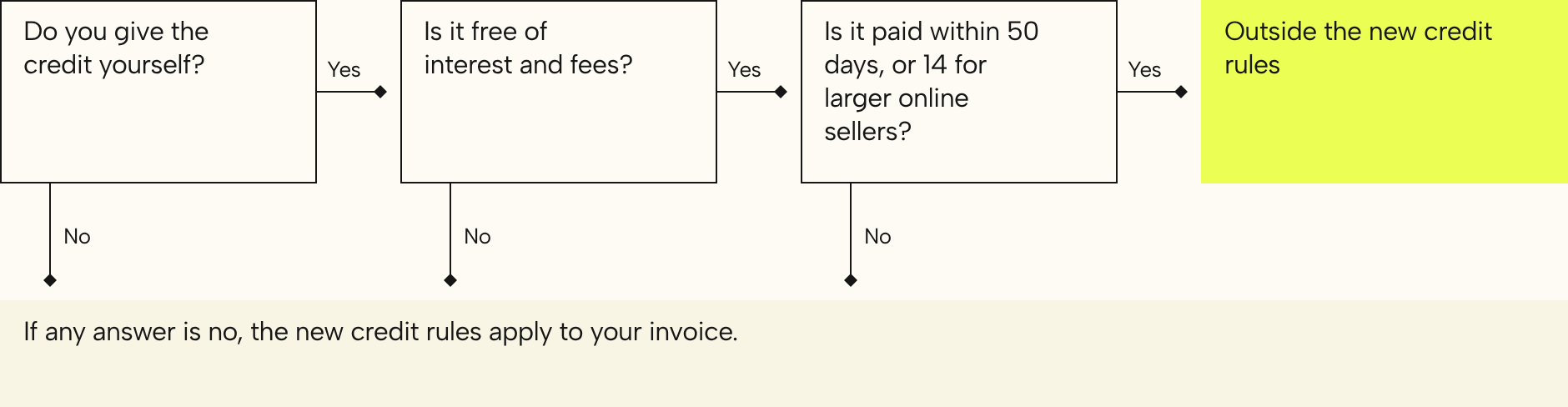
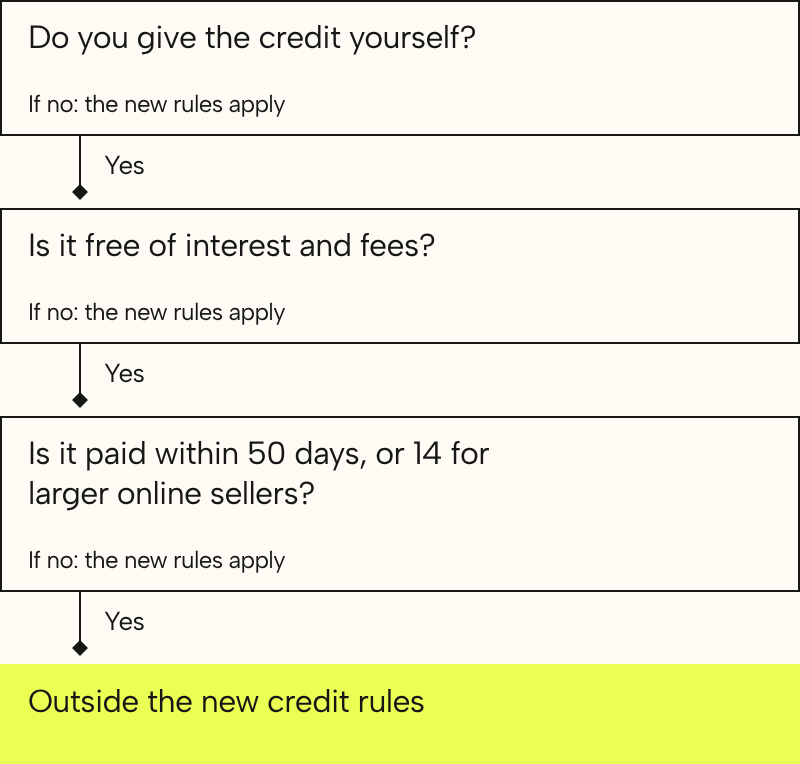
Larger companies selling online have a tighter limit: 14 days, and the invoice can't be sold on during that time. A company counts as smaller if it has fewer than 250 employees and either an annual turnover of no more than €50 million or a balance sheet of no more than €43 million. Under the EU definition, the figures include any parent companies and subsidiaries.
If you offer invoice or part payment from a credit provider, the provider is the creditor, and the credit check is theirs to run.
What if a credit provider pays you?
Then you may count as a credit intermediary. Finansinspektionen says a company is only covered as an intermediary if the creditor pays it for arranging the credit, for example through a commission, a revenue share or a subsidized fee. In Sweden, larger companies then need a permit from Finansinspektionen, and smaller ones come under Konsumentverket's supervision.
Who counts, the size limits and the deadlines in each market are covered in the CCD2 readiness guide.
What happens if a company breaks the rules?
In Sweden, Konsumentverket supervises the companies that don't need a permit and can issue sanction fees of SEK 5,000 to SEK 10 million, capped at 10% of the company's turnover the year before.
Finansinspektionen supervises the companies that need a permit and can issue sanction fees of SEK 5,000 to SEK 50 million, capped at 10% of the turnover from their credit business the year before.
For most merchants, the bigger risk is quieter: marketing that promotes pay later without the required information, or an agreement that turns out to make you an intermediary without anyone noticing. Both are worth checking before November 20.
What does CCD2 mean for your checkout?
Plan for more declined credit requests and make every other way to pay just as easy. Stricter checks mean some shoppers who were approved before will be told no. Those sales don't have to be lost, if the shopper can pick another payment method on the spot.
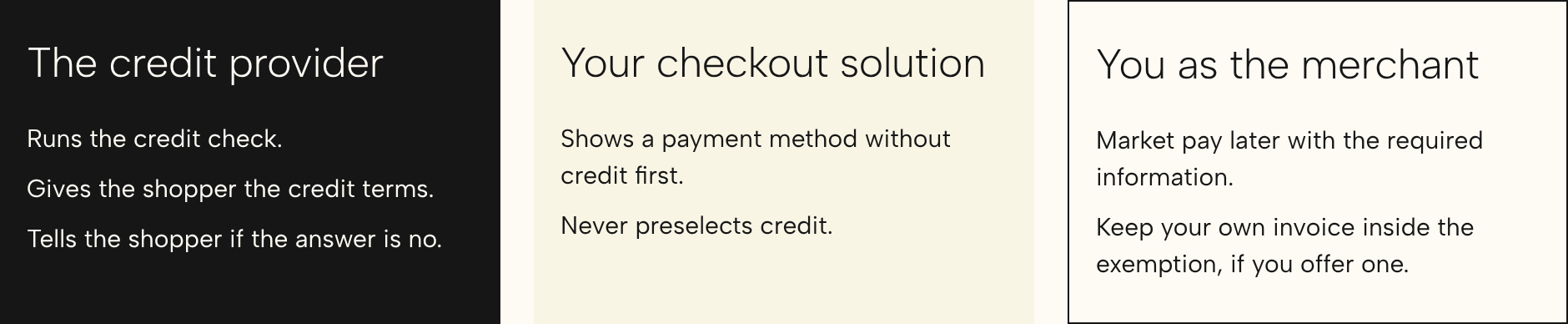
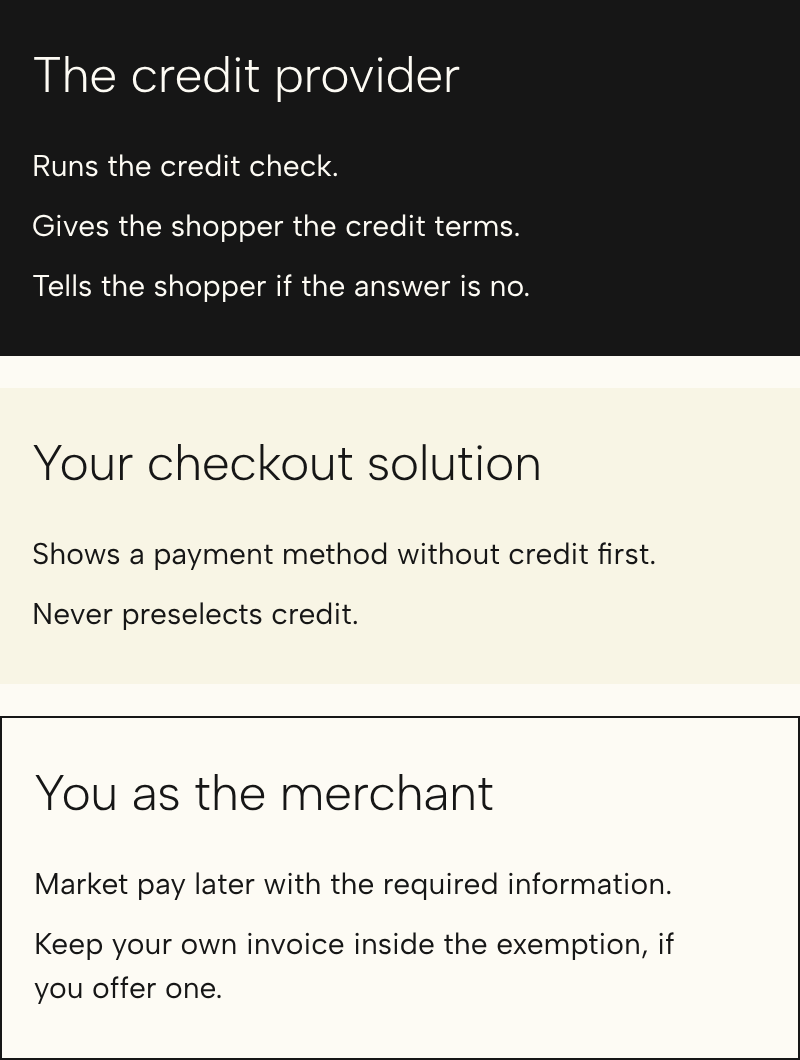
From November 20, 2026, the credit provider runs the credit check and tells the shopper if the answer is no. Your checkout solution shows the payment methods, putting one without credit first and never preselecting credit. You handle how pay later is marketed outside the checkout, such as in banners, on product pages and in emails.
One rule doesn't change. Since July 1, 2020, the Payment Services Act has said that a payment method without credit has to be shown first in Swedish checkouts, and credit can't be preselected when other methods are available.
What should you ask your providers?
Your checkout solution and your credit provider are the first places to get answers. Four questions cover most of it:
- How will a declined credit request show in my checkout, and what does the shopper see?
- Do you pay me anything tied to credit orders, such as a commission, a revenue share or lower fees?
- Which marketing material for pay later can I use, and does it carry the required information?
- If a shopper withdraws from the credit within 14 days, how is the order paid?
Where does Kustom fit?
Kustom is a fintech company with a checkout solution, and it doesn't issue credit itself. Kustom Checkout brings cards, Klarna, Apple Pay, PayPal and local favorites like Swish into one checkout, so shoppers always have a way to pay that doesn't depend on a credit decision.
What should you do now?
- Check your exposure
Look at how much of your sales went through invoice and part payment in the last three months. - Ask your providers
Go through the four questions above with your checkout solution and credit provider before November 20. - Review your own invoice
If you invoice shoppers yourself, make sure it stays free of interest and fees and within 50 or 14 days. - Update your marketing
Banners and emails that promote pay later need the required information about credit costs. - Test the decline path
Go through a declined purchase on your phone and make sure card, Swish and wallets are one tap away.
Sources
- EU Consumer Credit Directive (EU) 2023/2225, EUR-Lex
- Consumer Credit Act, SFS 2026:1011 (in Swedish), Riksdagen
- Credit intermediaries under FI and Konsumentverket supervision (in Swedish), Finansinspektionen, May 20, 2026
- Regulations and general guidelines on consumer credit (in Swedish), Finansinspektionen, October 13, 2026
- Act on businesses offering mortgage and certain other consumer credit (LVBK), SFS 2016:1024 (in Swedish), Riksdagen
- Subsidiary creditors and credit intermediaries (in Swedish), Finansinspektionen, checked November 17, 2026
- New rules for certain consumer credit (in Swedish), Konsumentverket, checked November 10, 2026
- Government bill 2019/20:79 on presenting payment methods (in Swedish), Riksdagen
This article describes the rules as of November 2026. It isn't legal advice.
Key facts
- The new rules apply from: November 20, 2026
Source: Directive (EU) 2023/2225 and Finansinspektionen - The Swedish laws: The Consumer Credit Act (SFS 2026:1011) and LVBK
Source: Riksdagen and Finansinspektionen - Credit can only be granted if: The shopper has the financial means to repay it
Source: Consumer Credit Act, chapter 3, section 13 - Right of withdrawal: 14 days from the credit agreement
Source: Consumer Credit Act, chapter 5, section 1 - The seller's own invoice is exempt if: It's free of interest and fees and paid within 50 days, or 14 days for larger companies selling online
Source: Konsumentverket, checked November 10, 2026 - The payment method shown first in Swedish checkouts: One without credit, and credit can't be preselected
Source: Payment Services Act, since July 1, 2020 - Sanction fees: SEK 5,000 to 10 million from Konsumentverket, or up to SEK 50 million from Finansinspektionen, capped at 10% of turnover
Source: Consumer Credit Act, chapter 9, section 7, and LVBK, chapter 6, section 7
FAQ
Not in Sweden. Since July 1, 2020, a payment method without credit has to be shown first, and credit can't be preselected when other methods are available. That rule stays as it is.
Some will. Credit providers have to check each shopper more thoroughly, so some who were approved before will be declined. Make sure they can pay another way without leaving the checkout.
Yes. Marketing for credit has to include the required information, including that credit brings costs for the shopper. Check your banners, product pages and emails against the new rules.
No. The right to withdraw from a credit agreement within 14 days is separate from the right to cancel a purchase made online. Ask your credit provider how a withdrawal from the credit is handled.
CCD2 is the EU directive. The Consumer Credit Act (SFS 2026:1011) is how Sweden writes it into national law, and it applies from November 20, 2026.
Ready to upgrade your checkout?
Join 24,000+ businesses delivering the buying experience shoppers expect. Get started on your own or talk to our team to find the right setup for you.